Choose a historical figure from Latin America that interests you and that you didn’t know much about before this class. What was their contribution, and what is their legacy?
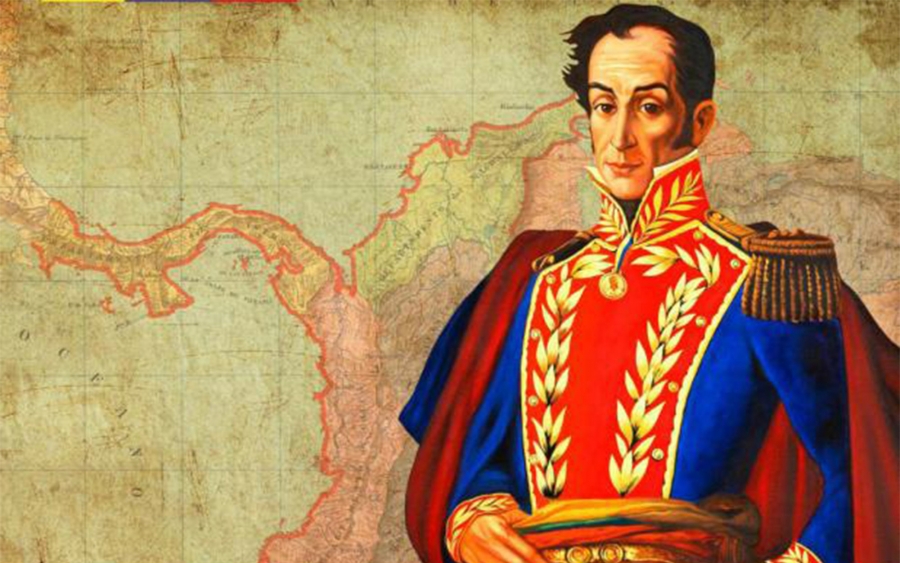
During Week 4 in Latin American Studies, I learned about a military commander named Simon Bolivar. He is known as The Liberator or The Founding Father of 6 different nations. Some of them include Peru, Venezuela, and Bolivia. One interesting fact about Bolivar is that Bolivia was named after him because he helped this country gain independence from Spanish rule. Also, he was born into a wealthy family that owned slaves. Through his money, Bolivar received the best education that others could not. In this reflective post, I will be giving my opinion on one of Simon’s addresses, specifically, The Angostura.
To begin, The Angostura Address was written in 1819. Throughout the address, Bolivar emphasizes how Venezuela’s constitution should be based on what the people want. He also continuously highlighted how he believed that all the citizens of Venezuela were equal regardless of their skin color. For example, in his speech, he states, “Venezuela…one that abolishes slavery, preserves civil liberties…” which showcases how despite his family owning slaves, over time, his views changed, and he wanted to free them instead. These are all great things that Bolivar wanted for the country of Venezuela, but his idea of a hereditary government was not. For instance, this vision made it sound like he preferred a monarchical form of government, although he claimed throughout his address that Venezuela should be a republic. He was known as a republican who admired monarchism. Others have stated that he was terrified of African Americans’ gauning rights. Also, indigenous people and black folks should have a voice, but only to a limit. The previous idea causes me, the reader, to be confused about where Bolivar truly stands. It has caused me to question whether he had the best interest of the Venezuelans at heart or if he wanted to make himself look good to gain more power. Comment down below and let me know what you guys think.
To finish, these past 4 weeks in this course have been better than expected, and I have really enjoyed the lectures taught by Dr. Crandall. I hope it continues to be this good, and see you next time!

Hi Vianca,
Thank you for sharing your thoughts. I also thought the Angostura Address was very interesting yet confusing, hence it took me some time to analyze and digest the words that were written. In regards to your question on whether Bolivar truly cared about the Venezuelan people or just wanted to make himself look good, I believe that he saw Venezuelans as the white people or mestizos. He seemed to downplay Indigenous and Black Venezuelans when he addresses Venezuelans as a whole. Even though many of these revolutionaries in Latin America including Simon Bolivar called and yearned for equality and freedom from the Spanish rule, they still had a rather bias mindset and were closed-minded. The Angostura Address as a whole seemed very idealistic in my opinion and somewhat contradictory as he praises monarchism which is against his call for a republic.
I completely agree with your analysis of Bolivar. I found it very odd that he preached about equality, yet turned around and ignored Indigenous and Black Venezuelan’s voices. I also agree with Jeremy’s comment of Bolivar viewing Venezuela as only white or mestizo. I believe that Bolivar’s ignorance is what causes him to contradict what he proclaims.
Bolivar’s assertions are difficult to discern due to his repeated contradictions. Like you address, I do think he was trying to gain status in his address by pleasing all populations. He discussed how he wanted a republic and thought all people were equal, which indigenous and black populations would support, yet he wanted a hereditary aspect of government and limited rights for indigenous and black populations, which the more powerful groups would support. It is interesting to ponder about whose side Bolivar would take—powerful or oppressed—if he had to make that decision. In conclusion, I think Bolivar was certainly an influential figure in Latin American history, but his legacy and goals regarding Latin America are of great debate.
For the very reasons you stated, Bolivar is a morally gray figure in history who stood for independence more than he stood for a politically sound future after independence. I do believe, in regards to his contradictions between a republic and a monarchy that he understood the complexities and nuances of politics in that he believed a monarchy would not sufficiently function in Latin America at the time, but believed that the monarchy was an ideal that could work for his believed “best” of countries. However, your point about his hesitancy about human rights for all Latin Americans is well founded. I agree that he may have been trying to garner the support of the indigenous and black Latin Americans in order to gain independence rather than actually advocate for their rights.
Bolivar’s story is full of contradictions, a force for progressive liberation and a strong-handed governor, an aspect of his story that allows both left and right-wing uprisings to elicit his endorsement. I think the most plausible explanation for his contradictions is that Bolivar was never inclined to the democratic aspect of the movement (evident in how he designed government) but was predominantly motivated by the disdain for Spain he had developed during his time there.
As a Venezuelan, my early memories in Venezuela was seeing Bolivar everywhere. In our currencies, in our schools, in the street murals. I used to tell my mom about Bolivar, and she would get mad and tell me he was not a good man, that he did us no good. I never understood why so. Apart from all the things you have mentioned, he was a dictator of Peru, and he allegedly was the responsible for the death of thousands of innocent of civilians. I think this is something to reflect on- who do we want to show our children as role models? How often are “role models” used to occult sinister intent in Latam leaders?