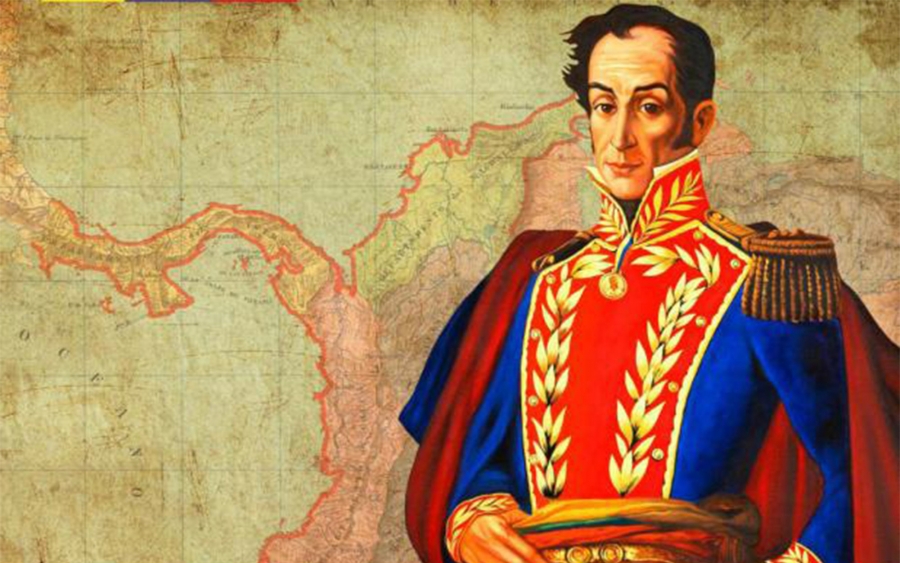
- This article is about the death of Hebe de Bonafini. She was the co-founder of Argentina’s Plaza de Mayo mother group. Also, it discusses her influence on Argentina’s society and how she helped create the Mothers of Plaza de Mayo. For more information, click on the link below.
- https://www.bbc.com/news/world-latin-america-63697367
- This article is about Cubans protesting because the government does not provide them with sufficient amount of resources, such as food and medicine. It also mentions how people have been arrested for peacefully speaking against the government of Cuba. For example, according to the article “Cuba prosecutors say they have convicted and sentenced close to 500 people in relation to the protests…” Cubans have been struggling for years. When will it get better?!?! For more information, click on the link below.
- https://www.cnn.com/2022/07/11/americas/cuba-protest-anniversary-intl-latam/index.html
- This article is about the struggles that Latino students and parents encounter in Tennessee schools. For instance, one of the parents explained how their children experience anti-immigrant and racist comments. Clara, a mother, also elaborates on her frustration with the lack of support that the school has to offer for Latino families. For more information, click on the link below.
- https://www.cnn.com/2022/12/03/us/latino-growth-changing-schools-tennessee-reaj/index.html
Reflective Post #6: Goodbye LAS101
What was your overall experience in Latin American Studies? What were your favorite topics learned during this course?
I have learned so much in Latin American Studies this semester. From Tupac Amaru to Fidel Castro to Cesar Chavez. I was surprised by how much I enjoyed this class compared to my others.
We have touched upon many topics in class, but I’ll only mention some of my favorites. To begin, Subcomandante Marcos is considered a hero in Mexico. Marcos named himself “Subcomandante” because he wanted the public to know that he was not the leader of the indigenous tribes but rather the assistant. His purpose was to help indigenous families in Mexico and to help them gain their rights as citizens. Marcos wanted to improve their living condition because he witnessed large families living in a one-room house. The houses were not made out of brick or had the capacity of sustaining a natural disaster. Marcos was an educated man who used media to gain followers that could potentially support him, such as the United States. Lastly, he was part of the Zapatista Movement, which was a guerilla militia that started in the 20th century. The members who joined wanted the same thing as Marcos, helping the natives in Mexico and spreading awareness. Another one of my favorite lectures was disability in the Caribbean. Dr. Seide, a medical sociologist, presented this topic and exemplified its significance. For instance, in 2010, there was an earthquake in Haiti increased the number of people who were disabled and impacted hundreds. In Haiti, the houses are not built in a manner to survive earthquakes. The houses are built with iron and cement, which easily falls during an earthquake eruption. In addition, individuals who are diable live a difficult life in Haiti because of its structure. The roads are not constructed in a way to help those who are impaired. Also, healthcare is private, which makes it less available to people without money. Lastly, people with disabilities in Haiti are discriminated against and viewed as abnormal. Hence, both of these topics were executed excellently, increasing my interest.
To finish, I can honestly say that my time in this course has been great. It has been a blessing to have Dr. Crandall as a professor.
Reflective Post #5: Comments
How frequent and effective have my peer responses been? How many responses have I entered over the course of the semester? What are some examples of my most successful comments? (You must cite yourself.) What have I learned from reading my fellow students’ responses?
In my opinion, my peer responses have been effective and frequent. I completed my 10 comments, which were from different students in my Latin American Studies class. I also enjoyed reading their reflection posts because they allowed me to learn about my peer’s opinions on topics discussed in class. Furthermore, it helped me connect with my class, and make new friends because we could talk about each other’s posts.
I have many examples of my most successful comments. On October 2, 2022, I commented on Leslie Atahualpa’s reflection post. I stated, “Just like you, it breaks my heart when I learn about all the hardship Latin American countries have gone through.” This demonstrated a connection between Leslie’s and my opinion on the issues that Latin American countries experience. It also helped me develop a beautiful friendship with her in and out of class. In addition, on November 25, 2022, I commented on Melanie Sanchez’s reflection post about Frida. I stated, “There’s another scene where she kisses another female in public without any shame. Seeing her be this fearless and open about her sexuality during the 1900s made me grow more fond of her as I continued to watch the movie.” This was successful because I added to Melanie’s post about how she believed Frida was a role model to all. It takes a lot of courage to speak about your sexuality in an era where it isn’t accepted by society. My last successful comment was on December 3, 2022. I commented on Maxwell Weaver’s reflection post and stated, “The movie does not demonstrate tension when Father Gabriel teaches the Guarani people about Christianity. I wonder if this was not true and if the Guarani people resisted it at first. What do you think?” This comment was strong because it shows me trying to initiate a conversation with Maxwell about the movie The Mission. Moreover, it helps us both think outside of the box and more critically.
Through my fellow students’ responses, I have learned about their perspectives on the topics conversed in person. For example, one of my peers commented how they agreed with my explanation of a historical figure named Simon Bolivar. They also added information about why he is considered morally gray in Latin America. This expanded my knowledge and thoughts about Simon Bolivar.
Reflective Post #4: The Harbage Page Exhibition
On October 12, 2022, I attended the Harbage Page’s exhibition, which focused mainly on the U.S. – Mexico Border Project. Susan Harbage Page was born in Ohio and has spent most of her life crossing borders. She has a master’s degree in Photography and a master’s degree in Music. When she was ten, her life goal became to understand crossing borders. Susan and her family went on a European camping trip. They crossed multiple borders. At Romania’s border, Susan and her family were held under police custody for a day. Due to this experience, she became interested in investigating the interworkings of border patrol. In this reflection, I will write about two of her sculptures influenced by her discoveries at the U.S. – Mexico Border Project.
The first artwork displayed was The Anti-Archive, which consisted of photographed images of personal items that belonged to people who attempted to cross the border. It included a red bra, broken glasses, black jeans, and a passport. These images triggered a sharp pain in my heart because they belonged to someone. Maybe a father, a sister, or a child. We are becoming more aware of the hardships thousands of immigrants encounter at borders. For example, families are separated, locked in cages, and hardly fed.
The Second artwork was the Monument to Life Givers. This artifact portrayed 53 brickers, each representing a body found on June 27, 2022. These individuals died at the US-Mexico border after being left behind by human smugglers in San Antonio, Texas. Just like The Anti-Archive, this piece touched my heart. It caused me to feel empathy for the victim’s families when I tried to imagine the pain they must have felt. The majority of the time, when people make the harrowing journey to migrate to the United States, they are in search of a better life. An example would be Mexico. In Mexico, the push factors are high violence, a terrible economy, and low opportunities.
These two relics lead me to question certain things. First, did the human smugglers feel apologetic when immigrants died in their care, or were they only interested in their financial aspirations? Secondly, did they regret their decisions? Lastly, the Harbage Page’s exhibition is relevant to LAS101 because it demonstrates the struggles of Latin American countries. In Mexico, thousands of immigrants seek asylum. Refugees come from parts of South America searching for a better life. To understand these citizens, one must understand how their country impacts them and why they strive for a better life.
Reflective Post #3: Dr. Wertheimer
What did I learn from Dr.Wertheimer’s talk? Do I now think about this issue or topic in a new light? (In particular, point to connections between this guest lecture and the background provided by our Chasteen text or other readings.)
On October 4th, 2022, a guest speaker named Dr. Wertheimer came to LAS101. He spoke about family law in Guatemala and explained to the class and I about a chapter he wrote. The chapter was called “Gloria’s Story.” It was about gender issues and concubinage in Guatemala. A concubine is known as a married man who has another life with another woman. Dr. Wertheimer taught me through his lecture and book, how common it was for men to do this. For example, concubinage was detected in Guatemala by the number of married people not equalling the number of men and women. There were more women than men stating they were in a relationship. He goes further in-depth about this through his writing. The “Gloria’s Story” was about a man named Julio who was married to Cristina, but had a concubine named Gloria. Gloria was only 14 years old; however, Dr. Wertheimer explained that in Guatemala, this occurred frequently. Also, if a man could support multiple families, such as Julio, they would be considered wealthy by society.
Moreover, he taught me the difference between ‘legitimate’ vs. ‘illegitimate’ children. According to Dr. Werthimer, ‘legitimate’ children mean “those who spring from a father and mother that are truly married.” However, ‘illegitimate’ children were those who were born outside marriage. One of the main things that frustrated me in “Gloria’s Story” and during the presentation was how in Guatemala, adultery was also considered illegal if a married woman were caught cheating. This isn’t the worst part but it was illegal to bring a concubine into a married woman’s house. Here, you can see gender inequalities being played out.
The connection between Dr. Wertheimer and the other readings I have done in LAS101 is how Spain influenced Latin America. For instance, when the Spaniards ruled in Guatemala, the church considered adultery illegal in a marriage. However, after Guatemala gained independence from Spain, they changed this law to try to separate the church from the country. In addition, the speaker and the readings both demonstrated how difficult it was for people to live a good life if a country’s economy was not doing well. Although we have not touched upon concubines in LAS101, we have been exposed to gender problems within Latin American countries. For example, women were less educated than men. They also cleaned, cooked, and cared for their children while the father worked. We saw this in the Faundo reading.
I had no previous knowledge of concubinage or Guatemalan family law. I had a great time listening to Dr. Wertheimer speak about “Gloria’s Story” and learning about its background. In my opinion, he sounds like a fantastic professor, and I hope that during my 4 years at Davidson College, I take one of his courses.
Reflective Post #2: Simon Bolivar
Choose a historical figure from Latin America that interests you and that you didn’t know much about before this class. What was their contribution, and what is their legacy?
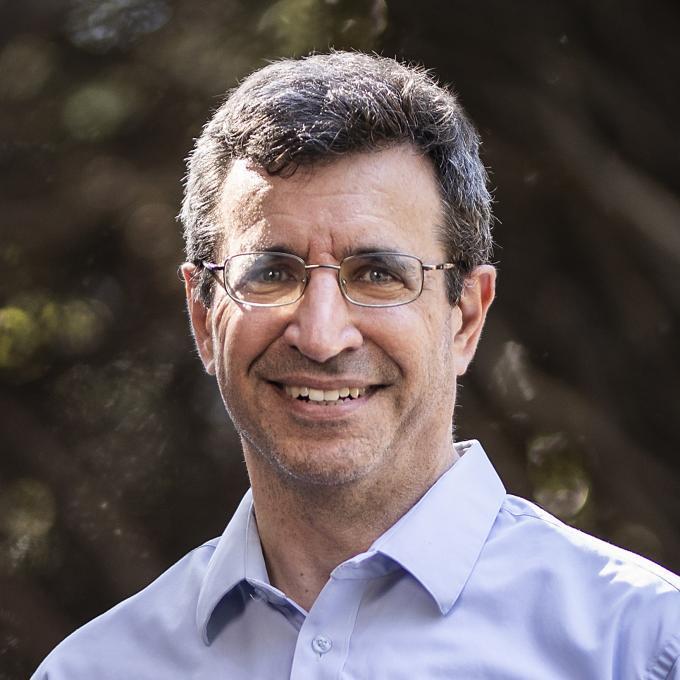
During Week 4 in Latin American Studies, I learned about a military commander named Simon Bolivar. He is known as The Liberator or The Founding Father of 6 different nations. Some of them include Peru, Venezuela, and Bolivia. One interesting fact about Bolivar is that Bolivia was named after him because he helped this country gain independence from Spanish rule. Also, he was born into a wealthy family that owned slaves. Through his money, Bolivar received the best education that others could not. In this reflective post, I will be giving my opinion on one of Simon’s addresses, specifically, The Angostura.
To begin, The Angostura Address was written in 1819. Throughout the address, Bolivar emphasizes how Venezuela’s constitution should be based on what the people want. He also continuously highlighted how he believed that all the citizens of Venezuela were equal regardless of their skin color. For example, in his speech, he states, “Venezuela…one that abolishes slavery, preserves civil liberties…” which showcases how despite his family owning slaves, over time, his views changed, and he wanted to free them instead. These are all great things that Bolivar wanted for the country of Venezuela, but his idea of a hereditary government was not. For instance, this vision made it sound like he preferred a monarchical form of government, although he claimed throughout his address that Venezuela should be a republic. He was known as a republican who admired monarchism. Others have stated that he was terrified of African Americans’ gauning rights. Also, indigenous people and black folks should have a voice, but only to a limit. The previous idea causes me, the reader, to be confused about where Bolivar truly stands. It has caused me to question whether he had the best interest of the Venezuelans at heart or if he wanted to make himself look good to gain more power. Comment down below and let me know what you guys think.
To finish, these past 4 weeks in this course have been better than expected, and I have really enjoyed the lectures taught by Dr. Crandall. I hope it continues to be this good, and see you next time!